

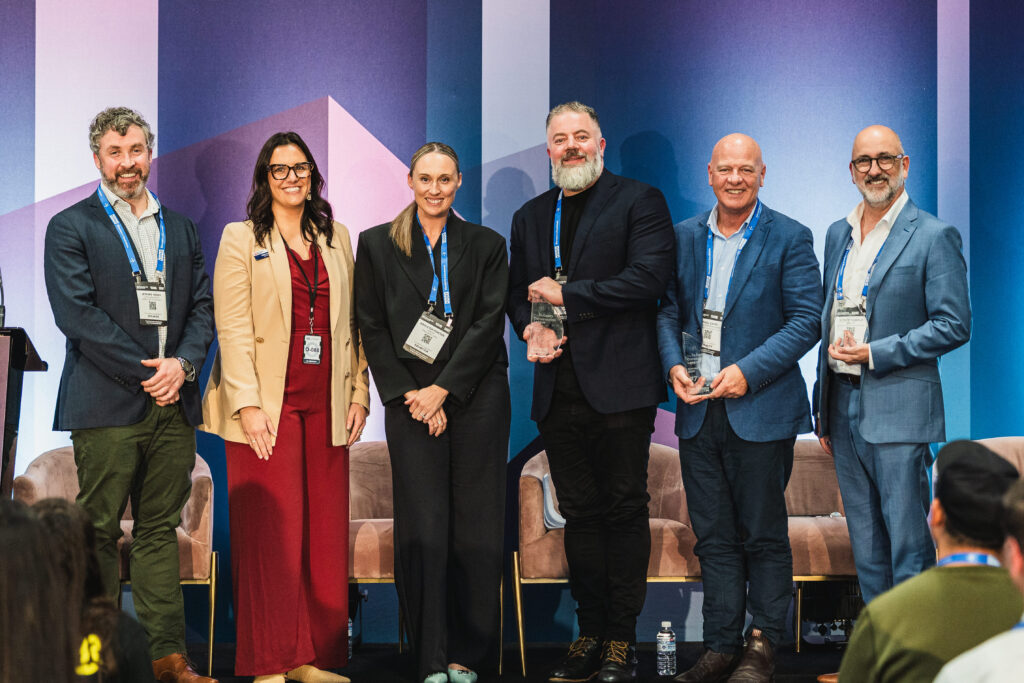
As Australia’s construction sector continues to navigate heightened market pressures, industry leaders gathered at Hubexo’s Construction League panel at Futurebuild Australia 2026 to discuss how to adapt to a rapidly changing market.
The panel coincided with the release of Hubexo’s 2026 Construction League report, which ranks Australia’s top 50 builders by the total value of projects that commenced construction during 2025 across commercial, community, industrial, legal and military, and multi-residential sectors.
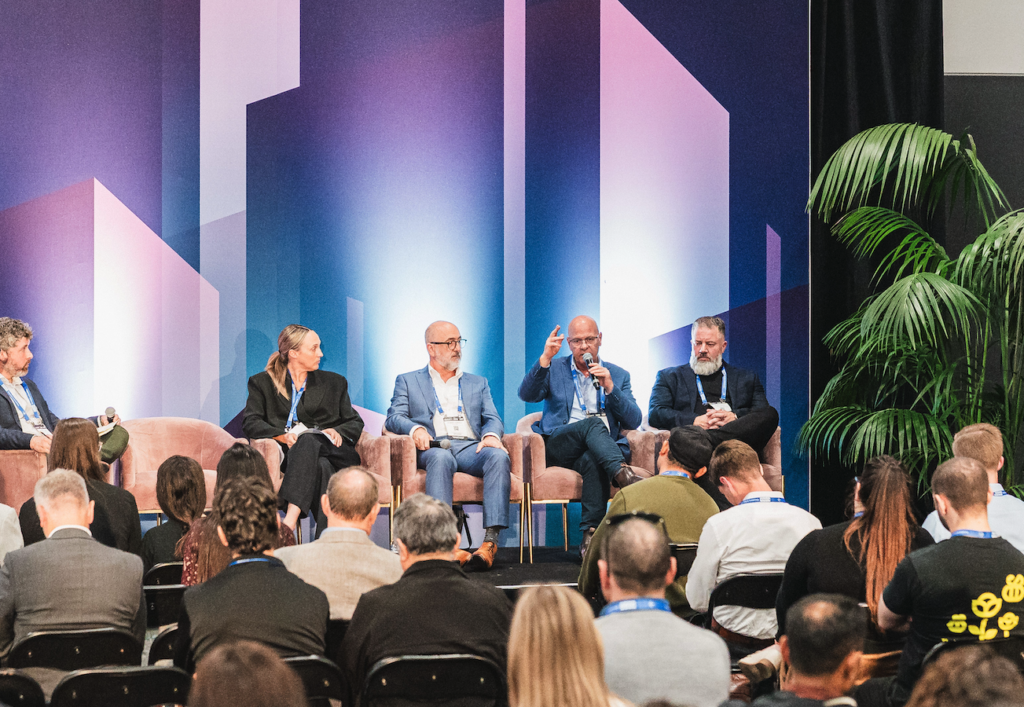
The discussion featured David Caputo, Co-Founder and Director at Kapitol; Paul David, National Head of New Business and Strategy at Hutchinson Builders; Robert Furolo, Executive Manager Corporate Communications at Deicorp; and Ashleigh Porter, President APAC at Hubexo.
Together, the panel represented three of Australia’s Top 10 builders, with Kapitol ranked first, Hutchinson Builders seventh and Deicorp tenth. The discussion was moderated by Jérémie Henry, Director of Growth at Cupix, this year’s major partner of the Construction League report.
The discussion explored how leading builders are responding to changing market conditions, growing project complexity and emerging opportunities. While challenges remain, the panel highlighted an industry increasingly focused on capability, selectivity and long-term sustainability.
Here are some of the key takeaways from the discussion:
Porter: Bigger projects demand greater ambition
Hubexo’s Ashleigh Porter, President APAC, highlighted one of the most significant findings from this year’s Construction League report.
While the Top 50 builders commenced 722 projects during 2025, a figure broadly consistent with the previous year, the total value of those projects increased by 32% to almost $44 billion.
“The market isn’t necessarily getting busier; it’s getting bigger”, Porter said.
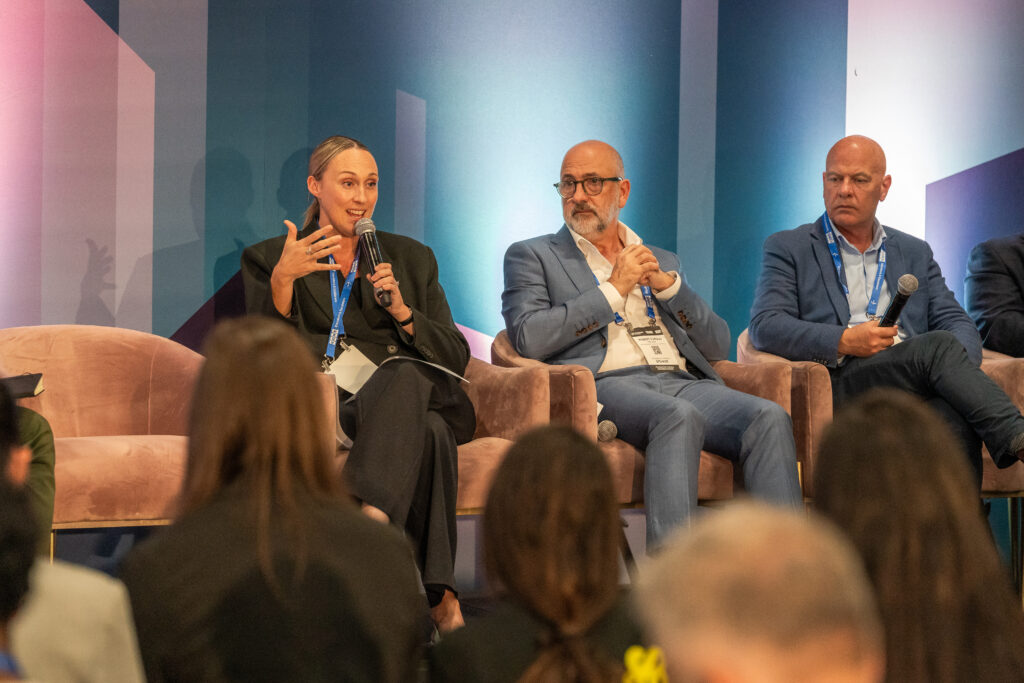
According to Porter, the industry’s growth story is increasingly being driven by larger, more technically complex projects rather than sheer volume.
Data centres, advanced manufacturing facilities, health precincts and large mixed-use developments are becoming more prominent, rewarding builders who have the capability to manage complexity and deliver certainty.
Porter pointed to Kapitol’s rise to the top of this year’s rankings as an example of this shift, noting that the builder commenced more than $3.5 billion worth of work across 17 projects, with a significant proportion concentrated in the industrial sector.
“The industry’s growth story is not so much about volume anymore; it’s about capability on delivering high-value, complex projects”, she said.
Caputo: Tech boom changing the scale of construction
For Kapitol Director David Caputo, the rapid growth of digital infrastructure is fundamentally changing what constitutes a major project in Australia.
“When we started, a $15 million data centre was a big job and a complex job”, Caputo said. “Today our average data centre build would be about $1.2 billion”.
Caputo said the scale of projects entering the market today is increasingly comparable to major infrastructure developments, creating significant opportunities for builders capable of delivering highly technical facilities.
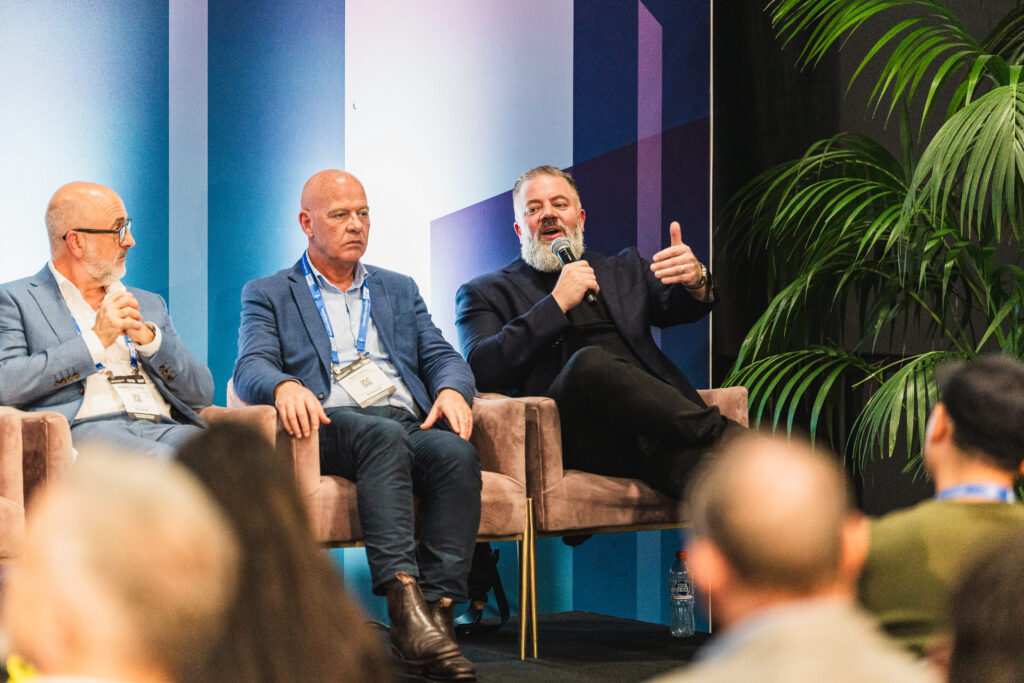
At the same time, he stressed the importance of diversification, noting that while data centres have become a major growth area, successful builders must continue to maintain balanced project portfolios across multiple sectors.
The emergence of new asset classes and increasingly sophisticated projects, he argued, is creating a new generation of construction opportunities across Australia.
David: Selectivity a competitive advantage
Paul David, National Head of New Business and Strategy at Hutchinson Builders, said the industry’s response to recent market volatility has been a greater focus on risk management and project selection.
Drawing on internal analysis, David explained how project duration has become one of the most important indicators of project risk.
“The longer the duration of the project, the higher the risk of the outcome”, he said.
Hutchinson Builders has increasingly focused on projects with shorter delivery cycles, providing greater certainty around costs, procurement and labour availability.
For Hutchies, selectivity is no longer simply a commercial consideration. It is becoming a defining feature of successful builders operating in a more complex market environment.
He also argued that builders are increasingly being viewed as strategic partners rather than commodity service providers.
“You need to be a solution finder and a solver of the client’s problem”, David said.
Furolo: Housing feasibility not stacking up
While residential demand remains strong, Deicorp’s Executive Manager Corporate Communications Robert Furolo said project feasibility continues to be one of the sector’s greatest constraints.
On the development side of the business, Deicorp continues to see strong buyer demand across both entry-level and premium residential projects, alongside growing investor activity.
However, rising construction costs continue to place pressure on project viability.
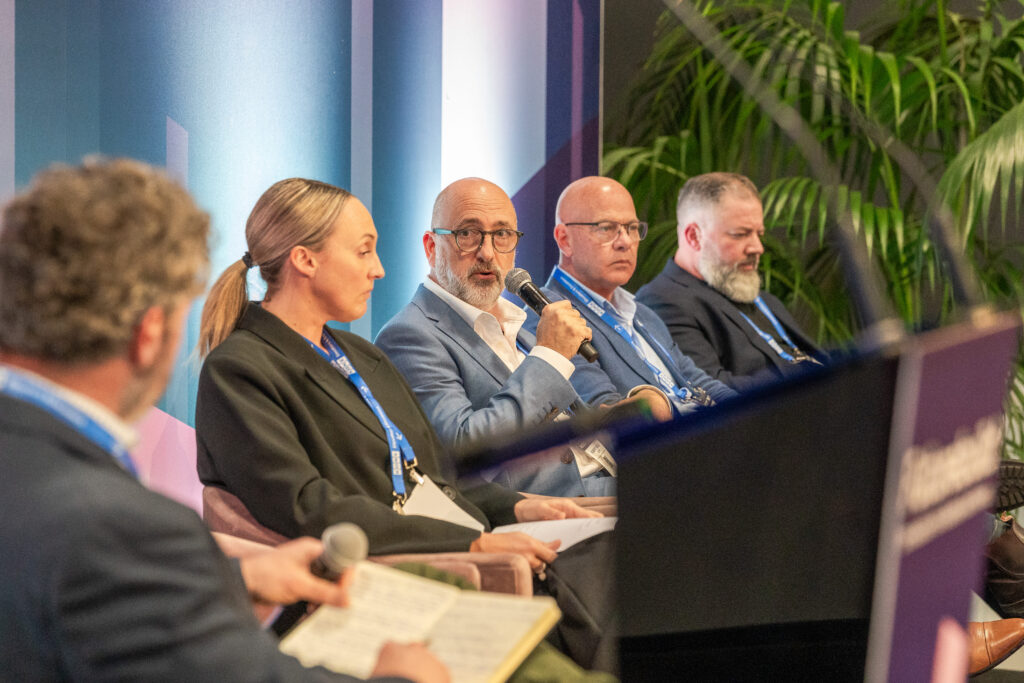
Furolo said subcontractors and suppliers remain cautious after the challenges of recent years and are increasingly building contingencies into pricing to protect themselves from future uncertainty.
Later in the discussion, he identified planning and feasibility as the most significant bottlenecks facing residential development.
“There’s probably less than 20% of Sydney currently feasible to deliver residential development”, Furolo said.
Technology, productivity and the next five years
Technology and artificial intelligence featured heavily throughout the discussion, although panellists agreed the industry’s greatest gains would come from using technology to improve decision-making rather than to digitise existing processes.
Porter said technology delivers the greatest value when paired with quality data, helping builders become more selective about the projects they pursue and how they deliver them.
Caputo argued AI also has the potential to address one of construction’s biggest sources of inefficiency: design and coordination errors. He said much of the waste builders manage throughout a project originates long before construction begins and suggested AI could play a significant role in creating more coordinated, constructible designs before work reaches site.
Furolo suggested AI could also improve productivity within the planning and approvals process, helping navigate increasingly complex development pathways.
David highlighted how Hutchinson Builders is already using AI to analyse project productivity at a granular level, helping identify opportunities for improvement across its supply chain.
Yet despite the growing role of technology, the panel agreed the industry’s biggest long-term challenge remains people.
Workforce challenges emerged as a recurring theme throughout the session, particularly as demand continues to grow across data centres, energy infrastructure and residential construction.
Caputo warned that demand for skilled trades is accelerating faster than the industry’s ability to supply them, pointing to electricians as a clear example of the pressures already emerging across the workforce.
“I need 20,000 electricians. There’s 25,000 electricians in Melbourne”, Caputo said, arguing that labour availability could become one of the defining constraints on the industry’s future growth.
David said improving workforce participation remained critical to the industry’s long-term success, particularly through attracting more women into construction careers and expanding the pipeline of skilled workers entering the sector.
“We need to tap into 50% of the workforce”, David said, describing people and culture as one of construction’s most significant challenges and opportunities.
As Australia’s construction market evolves, the consensus from the panel was clear, success will increasingly belong to builders that can combine technology, strong partnerships and delivery capability to navigate an increasingly complex project environment.
Who are Australia’s Top 50 Builders?
Unveil the top 50 and all the insights by downloading your free copy of the report.
The 2026 edition of the Construction League is proudly presented in partnership with Cupix, our Major Partner, and our Event Partner, Futurebuild Australia.